Sesame Seed Quality & Buyer Specification Guide
What purity tiers like "99/1", moisture and oil-content specifications, and colour grading actually mean when sourcing sesame seed, plus what we could and couldn't verify about Tanzania's own growing regions and export market. Grading conventions here are industry/national-standard-wide, not Tanzania-specific unless stated -- see our Tanzania sesame overview for origin, production and market context.
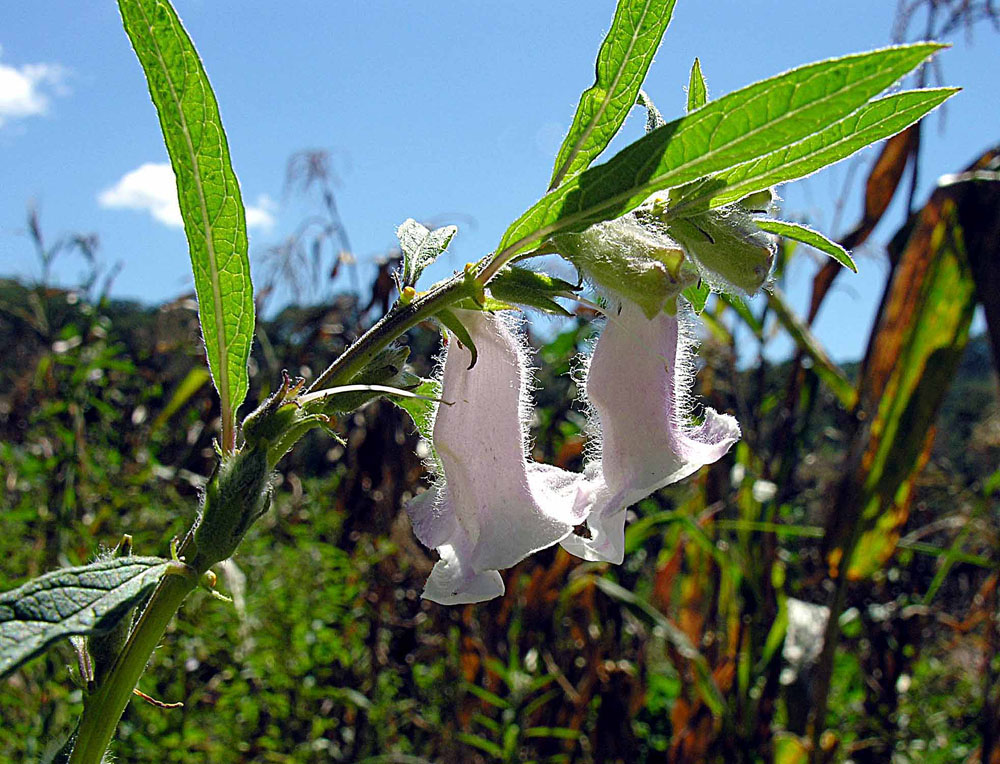
.jpg)
Harvest Seasonality
- Jan -- Outside main harvest
- Feb -- Outside main harvest
- Mar -- Outside main harvest
- Apr -- Outside main harvest
- May -- Peak harvest
- Jun -- Peak harvest
- Jul -- Outside main harvest
- Aug -- Outside main harvest
- Sep -- Outside main harvest
- Oct -- Outside main harvest (current month)
- Nov -- Outside main harvest
- Dec -- Outside main harvest
Verified only for Lindi and Mtwara regions specifically (a peer-reviewed smallholder study): planting concentrated in January (63.3% of farmers) and early February (25.4%); harvest concentrated in May (37.9%) and June (42.5%), consistent with a commonly cited 90-120 day sesame maturity window. We could not find equivalent region-specific timing data for Songwe, Dodoma, Ruvuma or Morogoro -- also major sesame-growing regions -- and are not assuming they share the Lindi/Mtwara calendar.
Source: "Sesame production constraints, variety traits preference in the Southeastern Tanzania" (ScienceDirect) — last verified 8 October 2026
Grading -- no single global regulator, several national ones
We could not find a dedicated Codex or ISO standard for raw sesame seed itself. Codex Standard CXS 210-1999, Standard for Named Vegetable Oils, covers sesame oil as a finished product (colour/odour/taste requirements, a positive Baudouin test as the characteristic identity check, fatty-acid composition) -- a genuinely different thing from a raw-seed trading specification. What we did find is a set of national seed-grading standards that don't fully converge with each other: Indian Standard IS 4429:1967, "Grading for sesame seeds for oil milling"; Ethiopian Standard ET 439:2000 (Quality and Standards Authority of Ethiopia); a reported Sudanese Standard No. 116-2002; and Tanzania's own TZS 741, Simsim (Sesame) Seeds -- Specification (Tanzania Bureau of Standards). We located all four as named, real, compulsory-or-near-compulsory national standards, but could not open the full numeric tables inside any of them except indirectly via trade specification sheets (next section) -- we are naming these standards' existence honestly rather than inventing their contents.
We also found Tanzania's own standard cited with two different edition years in different secondary sources -- "TZS 741:2003(E)" in one compulsory-standards list and "TZS 741:2010" (gazetted 25 January 2011) in TBS's own notification record -- and a separate mention of a further-revised "TZS 741:2018." We are flagging the edition-year disagreement rather than guessing which is current. Sources: IS 4429:1967; ET 439:2000 (Internet Archive record); TZS 741:2010 notification record; CXS 210-1999, Standard for Named Vegetable Oils (sesame oil, not seed).
Purity, moisture, oil content & FFA -- trade-grade conventions
In the absence of one universal seed standard, the sesame trade runs largely on a widely used purity/foreign-matter percentage-pair convention ("98/2" means 98% minimum purity against 2% maximum foreign matter, and so on) that we found represented consistently across trade specification sheets, albeit from trading-company sources rather than a standards body:
| Trade grade | Purity (min) | Moisture (max) | Oil content (min) | FFA (max) | Foreign matter (max) |
|---|---|---|---|---|---|
| Natural 95/5 | 95.00% | 4–6% | 48–50% | 1–3% | 5% |
| Natural 98/2 | 98.00% | 4–6% | 48–50% | 1–3% | 2% |
| Natural 99/1 | 99.00% | 4–6% | 48–50% | 1–2% | 1% |
| Hulled 99.95 | 99.95% | 4% max | 48–50% | ~1% | 0.05% |
| Hulled 99.98 (premium) | 99.98% | 4% max | 48–50% | ~1% | 0.02% |
Oil content ranges disagree materially between sources -- one general industry summary gives a wide 44–58% range for sesame seed overall, while the trade-grade table above (from a single trading company's specification sheet) gives a narrower 48–50% minimum, and a separate buyer's-guide source cites by-origin figures of 53–56% for Ethiopian "Humera" type, 52–55% for Sudanese, 50–53% for Pakistani and 49–53% for Nigerian seed. We found no equivalent origin-specific oil-content figure for Tanzanian sesame, and are not inventing one by interpolating from neighbouring origins.
Separately, a "sortex grade" convention describes optical colour-sorting purity rather than the purity/FM pairs above -- tiers of 99%, 99.5% and 99.95% were cited, with 99.95% associated with premium tahini and Japanese-bakery-grade demand.
Sources: TLS Mercantile, sesame seed specification sheet (trade-grade purity/moisture/oil/FFA table -- an India-based international trading company's own published specification, not a Tanzania-specific or standards-body source); Kehkashan Co., "Sesame Seeds Buyer's Guide 2026" (by-origin oil-content figures, sortex grades, EU aflatoxin reference); general spice-trade summaries for the wider 44–58% oil-content range.
Colour grading -- a correction to our own brief's assumption
Sesame is commercially graded by colour -- white/light (hulled sesame is typically white), brown, and black are the three terms we found used consistently. But which colour commands a premium is not a single universal fact -- it depends on which end-market channel is buying:
- White/light, larger, more uniform seed is generally preferred for hulling and tahini production, where dehulling ease and visual appearance in the finished paste matter.
- Black sesame commands a significant premium in East Asian retail, confectionery and traditional-use channels -- one source describing black sesame products as priced at double (or more) white sesame products in the Chinese market specifically, and more broadly citing a 20–50% premium for black over white sesame, with the premium most pronounced for organic black sesame.
- Brown/mixed-colour seed, destined mainly for oil-crushing, is generally the lowest-value tier of the three, since colour matters less for crushing than oil content does.
We could not find a Tanzania-specific documented price differential by seed colour -- we know Tanzania's dominant export channel is China (see below), but we could not confirm from our sources whether that trade is predominantly the crushing/hulling segment (where white/light would be preferred) or includes a meaningful black-sesame/confectionery component (where the premium runs the other way). This is an honest gap, not an assumption we are willing to state as fact.
Sources: Aarvi Global Trade, "Black vs White Sesame Seeds: Importers' Preference"; Tradelink International, "Black sesame vs white sesame: what procurement teams need to know".
Aflatoxin & food-safety limits
Sesame, like other oilseeds, is subject to aflatoxin contamination risk and destination-market limits. We found EU Regulation (EC) No 1881/2006 on contaminants in foodstuffs cited as the relevant EU reference for aflatoxin limits on sesame intended for direct human consumption, but we did not independently open the regulation's current consolidated text to confirm the exact current µg/kg figures specifically for sesame, so we are not stating a number we have not verified ourselves.
Packaging
As with the other commodities in this series, export packaging weights are industry convention, not a figure fixed by any standard we found.
- Jute bags, commonly 50–100kg net.
- PP woven bags, commonly 25–50kg net.
- Bulk/FIBC bags, 500kg–1 tonne, for very large shipments.
Container-loading figures disagree between sources -- one source cites roughly 18–19 metric tons per 20ft container, another cites 22–26 metric tons -- plausibly reflecting different bag types/packing density rather than one of the two being simply wrong, but we have not resolved which applies by default. Treat any single "X tonnes per container" figure as approximate until confirmed with your specific packer.
Tanzania-specific: growing regions, export market & harvest timing
Multiple trade and research sources name Lindi, Mtwara, Ruvuma, Songwe, Dodoma, Morogoro and Singida as sesame-growing regions, with Lindi and Mtwara consistently cited as the leading pair. Exact shares differ by source: one breakdown gives Lindi 20.9%, Songwe 18.3%, Dodoma 17.1%, Ruvuma 10.3%, Mtwara 8.1% of production; a separately sourced figure states Mtwara and Lindi together accounted for roughly 34.1% of land planted to sesame in the 2019/2020 season and some 70% of Tanzania's sesame exports. These two figures are not strictly inconsistent (20.9% + 8.1% ≈ 29%, in the same range as 34.1% land share) but come from different metrics (production share vs. land share vs. export share) and different sourcing, so we present them separately rather than reconciling them into one number.
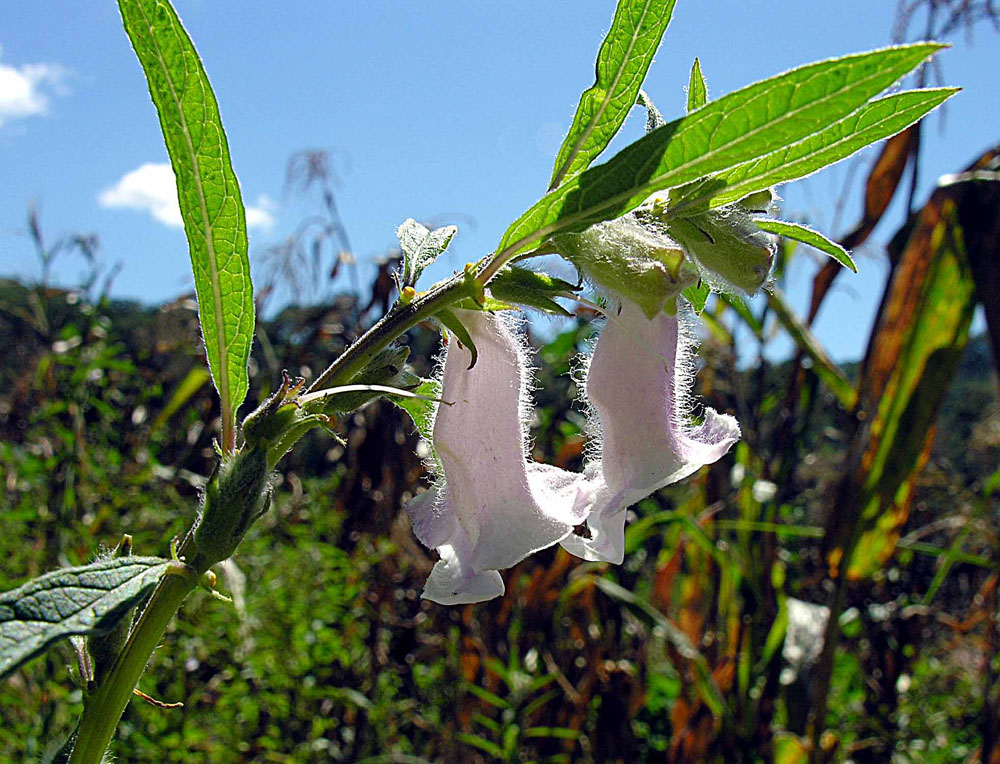
.jpg)
On "Liparamba" specifically: our own photo assets above are geotagged by their original Wikimedia Commons descriptions to the Liparamba area, in Ruvuma Region near the Mozambique border. We searched specifically for "Liparamba" in the sesame production literature and did not find it independently named as a production hub in any agricultural source we checked -- only that Ruvuma Region itself appears among the "key"/"main" sesame-growing regions in the broader lists above. We are stating this as an honest gap rather than implying the photographs prove Liparamba is a major documented production centre.
China is overwhelmingly Tanzania's dominant sesame export destination -- sources describe China as consistently the top buyer by value, with one tracker citing sesame as Tanzania's single largest export to China by value in 2024 (reported at roughly US$202 million, ahead of copper concentrates and dried fish), and another figure citing China at 86% of Tanzania's total sesame export value with Japan a distant second at 13%. Exact percentages and dollar figures differ year to year across trackers, which is expected for a commodity with volatile annual trade flows -- we are not treating any single year's figure as a permanent fact.
Harvest timing is well-documented for Lindi and Mtwara specifically, but not for Tanzania's other sesame regions. A peer-reviewed study of smallholder practice in those two regions found planting concentrated in January (63.3% of farmers) and early February (25.4%), with harvest concentrated in May (37.9%) and June (42.5%) -- consistent with the generally cited 90–120-day maturity window for sesame (harvest triggered when roughly two-thirds of pods have turned from green to yellow/brown). We could not find equivalent region-specific planting/harvest timing data for Songwe, Dodoma, Ruvuma or Morogoro, and are not assuming those regions follow the same calendar as Lindi/Mtwara -- that would be exactly the kind of invented-by-extrapolation claim we're trying to avoid in this series.
Sources: "Sesame production constraints, variety traits preference in the Southeastern Tanzania: Implication for genetic improvement" (ScienceDirect -- planting/harvest-month data for Lindi and Mtwara); Tracextech, "Traceability in the Sesame Supply Chain in Tanzania"; The Citizen, "Tanzania bets on quality in tough sesame market"; Digest.tz, "Sesame Seeds in Tanzania".
Export documentation
We did not find a sesame-specific government export manual (comparable to the Cashewnut Board's own rules for cashew) or evidence of a dedicated sesame marketing board for Tanzania. The documentation set below is assembled by analogy to common agricultural-export practice (as in our cashew, vanilla and rice guides), not from one verified sesame-specific source:
- Commercial Invoice and Packing List
- Bill of Lading
- Certificate of Origin
- Phytosanitary Certificate (Tanzania Plant Health and Pesticides Authority, TPHPA)
- Quality/analysis certificate against the purity/moisture/oil/FFA figures quoted (see table above)
- TBS inspection/certification where applicable to the destination market, and EU aflatoxin compliance documentation specifically for EU-bound shipments
Sesame seed falls under HS heading 1207, with sesame seed specifically identified at the 1207.40 sub-heading level in the customs schedules we checked.
See also our wider Quality Inspection & Pre-Shipment Verification and Incoterms for Commodity Buyers guides for the cross-commodity detail behind both.
Buyer specification checklist
Worth putting in an RFQ or purchase order, whether or not every field applies to your order:
- Trade grade quoted -- e.g. "98/2 natural" or "99.95 hulled" -- and whose specification sheet that grade is defined against, since there is no single global standard (see above).
- Hulled vs. natural -- and, if hulled, confirm the dehulling/sortex process used.
- Colour -- white/light, brown, or black -- and which end-use channel you're buying for, given the colour-premium nuance documented above.
- Moisture -- a target maximum; note sources cluster around 4–6%.
- Oil content -- a minimum %, and whether you need a lab test basis (Soxhlet extraction) rather than a supplier-quoted figure.
- FFA (free fatty acid) -- a freshness/quality indicator; request if oil end-use matters to you.
- Foreign matter / purity -- per the purity/FM percentage-pair convention above.
- Packaging -- jute vs. PP woven vs. bulk/FIBC, and net weight.
- Aflatoxin compliance -- specify the destination market's regulation (e.g. EU 1881/2006) rather than assuming a generic limit.
- Certification requirements -- organic, fair-trade or other, if applicable, and who issued it.
- Testing requirements -- certificate of analysis, third-party lab, or your own incoming inspection.
- Destination & Incoterm -- see our Incoterms for Commodity Buyers guide.
Sample & inspection guidance
- Appearance -- colour uniformity within the grade ordered, seed size/plumpness, visible foreign matter (stones, stems, soil, other seeds).
- Aroma -- should smell clean and nutty, not rancid or musty -- rancidity tracks with FFA and poor storage.
- Moisture feel/behaviour -- excessively damp seed risks mould and FFA development in storage; this is a screening cue only, not a substitute for a moisture-meter or oven-dry test.
- Pest activity -- inspect for live insects, webbing or frass.
- Packaging condition -- intact bags, no moisture ingress, correct net weight.
A visual/aroma sample check is a screening step, not a substitute for laboratory testing -- oil content, FFA, moisture percentage and aflatoxin levels all require lab equipment to confirm, not inspection by eye. Our general Quality Inspection & Pre-Shipment Verification guide covers the wider pre-shipment inspection process that applies across commodities, including sesame.
Full Tanzania sesame profile
Origins, production regions, processing in practice, and market/trade data with sources.
Read the full profile →Suppliers
Export Trading Group (ETG)
Pan-African agri-commodity trader; official sourcing materials state its sesame sourcing footprint spans Tanzania, Mozambique, Burkina Faso,…
Golden Seed Export
Agricultural commodities exporter (sesame seeds, sunflower oil, raw cashew nuts, sugar, garlic) sourced from Tanzania, FOB…
Megnacio Co. Ltd
Dar es Salaam-based sesame exporter sourcing from small- and large-scale Tanzanian farmers; states oil content min.…
Kili Quality
Moshi-based trader sourcing sesame from Lindi, Mtwara and Singida (and Ghana); states Tanzanian sesame is valued…

Olam Tanzania Limited
Tanzania cashew/sesame procurement branch of the Olam multinational agri-trading group, based in the southern Mtwara region;…
Last reviewed 8 October 2026. Sources cited inline above; see also Data Sources and Methodology for how we handle disagreeing figures and unverifiable claims.